excerpted from a John Ivison
article in the National Post:
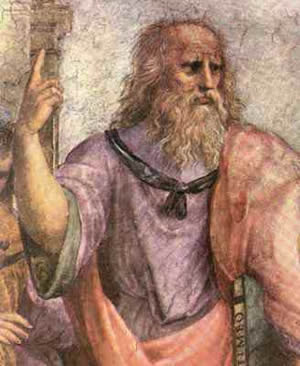
The Republic is Plato's vision of the ideal community. The book takes the form of an imaginary conversation, held around 430 BC, between Socrates, Plato's mentor, and a supporting cast of interlocutors, whose main role is to cheer-lead enthusiastically when Socrates says something clever.
The book stirred a surprising reaction in me. Sitting in our most hallowed of political institutions while reading The Republic, I felt more protective of our parliamentary system than I have ever when it's full and the honourable jackasses are braying at one another across the aisles.
This was because Plato's prescription for the ideal society sounds like it would be a nasty place to live. In fact, Plato seems to have been one of the more obtuse influences for Adolf Hitler when it comes to unsavoury ideas like infanticide for "defective offspring."
Plato was no great fan of democracy, certainly not as it was practised in his day. He saw it leading to too many unqualified people running the country.
He also disparaged oligarchy, the rule by a few elite Athenians who adopted the Spartan idea of a ruling class united by austerity.
Worst of all, he thought, was tyranny -- rule by one man, who would appropriate all wealth and power.
Plato argued that democracy was intrinsically unstable and would lead inevitably to tyranny because of the extreme desire for liberty at the expense of everything else. In this circumstance, the people would rob the rich, who would defend their interests by turning toward oligarchy. The people would end up putting forward a single popular leader, Plato argued, "who[m] they would nurse to greatness." The rich would, in turn, plot to banish or kill him, leading the tyrant to create a personal bodyguard.
"In the early days, he has a smile and a kind word for everyone; he says he's no tyrant, makes promises, public and private, frees debtors, distributes land to the people and his followers and puts on a general mild and kindly air. But …he will continue to stir up war in order that the people may continue to need a leader."
It is unfortunate that while Hitler clearly read The Republic, Neville Chamberlain had it sitting by his bed until late-summer 1939.
The only workable alternative in Plato's eyes was the regime he proceeded to invent. He believed that most people are too irrational to govern effectively and that rulers should be chosen from among those in whom reason was the dominant characteristic -- that is, philosophers. Namely him and his mates.
He came up with the idea that "philosopher kings" should rule, aided by a class of "guardians," who would be able to restrain their natural appetites by use of reason.
The elite was to be protected from itself because it would have no private property, wealth or homes and so would have nothing to gain from accumulating power and wealth.
A strict meritocracy meant that women were qualified to become guardians -- at odds with Athenian convention, which barred women from politics. Down the ages, this has been the cause of much celebratory bra-burning but a close reading of Plato's text suggests he could be as sexist as the best of them. Not only did he deem women the weaker of the two sexes, he insisted that in his new order they would have to strip for exercise.
As well as depriving guardians of personal property, he advocated that they should not have private families. Society would be reorganized by sending all citizens over the age of 10 into the countryside, removing children from their parents' influence. "This is the best and quickest way to establish our society," says Socrates.
It would certainly be the quickest way to establish what a monumentally bad deal it was to be a guardian. "So let me get this straight -- you're going to take charge of my kids, pay for their education and take them to hockey practise? Meanwhile, I go and live quietly in the countryside. OK -- can I sign something? I want to sign something."
In answer to my own question from earlier, reading The Republic was well worth the effort. It is one of those seminal texts that has provoked revolutionary thinking in political thought down the ages and some of its analytical passages still provoke pause. Plato's contention that most people prefer bread and circuses to personal political responsibility is as valid in today's climate of declining voter turnout as it was in his day.
But his solution of an elite class that would regulate poetry, music, art and all other facets of life, to weed out "bad character, ill-discipline, meanness or ugliness," without institutional checks and balances, was always likely to end badly.
Perhaps The Republic should be read in similar fashion to parts of the Old Testament, an allegorical tale about justice, knowledge and good vs. evil--after all, Plato's central contention is that "living well" should be the highest aim of humanity.
It may be unfair to Plato to judge his vision by the failure of those who followed it. But sitting in my perch in the parliamentary press gallery, I was brought back to Winston Churchill's famous quote about democracy being the worst form of government, except all the others that have been tried.